

Recent Perspectives and Continuing Debates on Defining Realism in Seventeenth-Century Dutch Art.
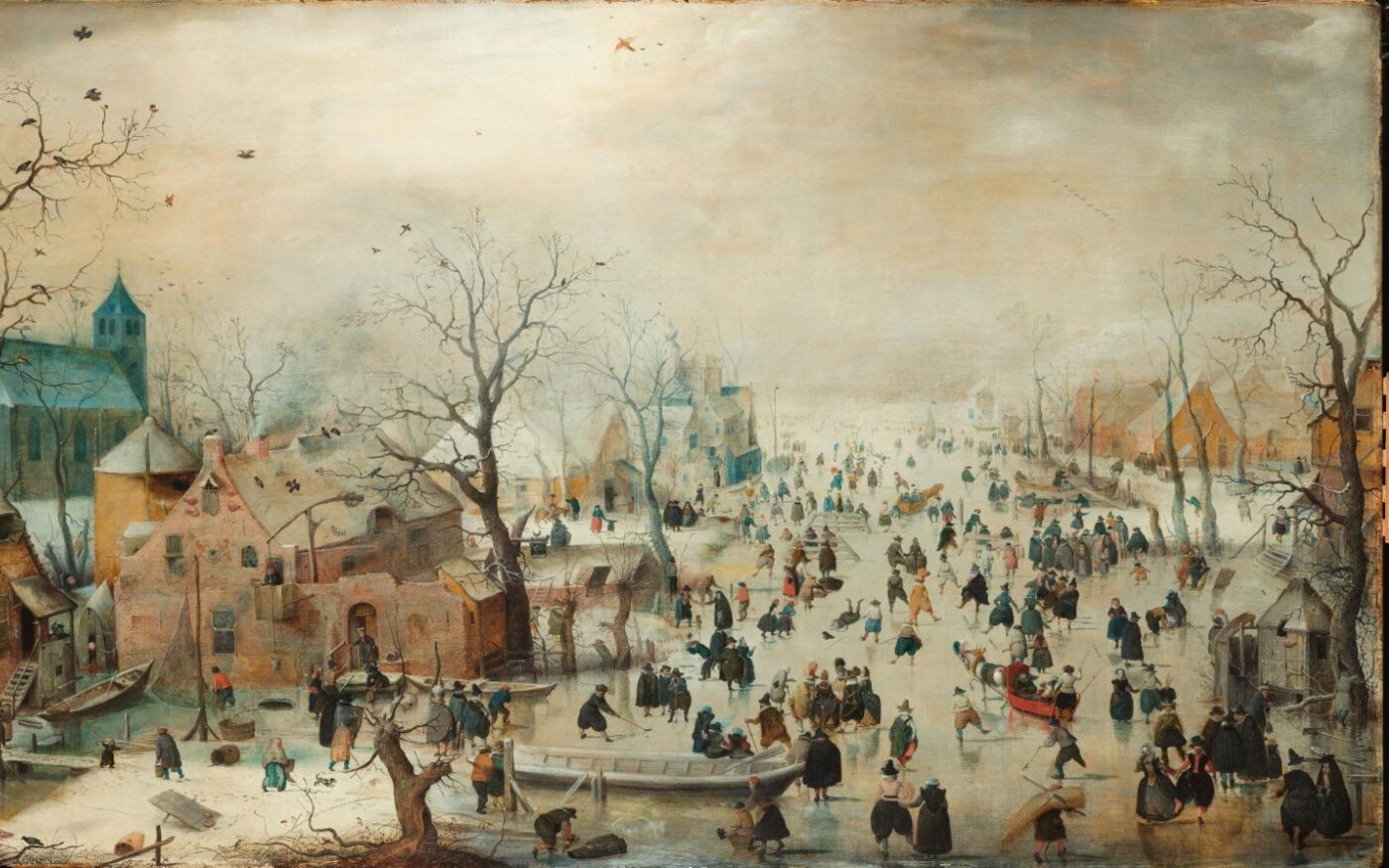
Fig 1: Hendrick Avercamp (1585-1634), ‘Winter Landscape with Skaters’ (1608), Rijksmuseum, Amsterdam
The Dutch Golden Age refers to the seventeenth century, when the Dutch Republic experienced exceptional economic prosperity, global trade expansion, and remarkable achievements in art and science. The term “Golden Age” was given by historians to characterize this period as a peak of cultural and economic flourishing. The extraordinary artistic production of the Golden Age Dutch Republic has long been associated with the concept of realism. Dutch paintings from this period frequently depict domestic interiors, landscapes, portraits, and scenes of everyday life rendered with remarkable visual precision. Early art historians therefore interpreted these images as direct reflections of Dutch society and often described them as mirrors of everyday life.1 In recent decades, however, this interpretation has been increasingly challenged. Scholars now emphasize that Dutch paintings were shaped by artistic conventions, social conditions, and ways of viewing. Recent debates complicate the traditional understanding of realism as a straightforward representation. As a result, realism within the historiography of Dutch Golden Age painting has become a big debated concept. Realism depends on historical context. It can be seen as a complex approach shaped by artistic conventions, social context, and viewer experience. This essay argues that realism should not be implied as a fixed visual quality, but as a historically contingent interpretive category. This essay therefore asks: How should realism in seventeenth-century Dutch art be understood in the light of recent debate? From a historiographic perspective, realism emerges as a concept shaped by changing the analytical category. One important scholarship approaches realism as a historiographic problem shaped by changing art-historical methods. Mariët Westermann notes that the interpretation of Dutch art was deeply influenced by debates surrounding the relationship between visual description and symbolic meaning.2 Symbolic meaning which, in her view, was always consciously incorporated through the painter’s point of view. For example, a domestic interior may appear observational, while still following established compositional patterns. Other scholars have complicated the traditional definition of realism by examining the role of artistic conventions. In particular those associated with genre. David R. Smith argues that realism in Dutch art cannot be recognized simply as an accurate visual description. The reason for this is that many paintings operate through complex interactions between different pictorial genres.3 Seventeenth-century Dutch artists frequently combined elements of portraiture, genre painting, and historical imagery creating works that blur the boundaries between established categories.4 These mixtures reveal that realism was not merely concerned with representing the visible world. Viewers' expectations were manipulated about the meaning of a particular subject. Smith therefore suggests that realism should be studied as an artistic mode that incorporates narrative irony, and social conventions rather than simply reproducing visual appearances.5 By highlighting the instability of genre boundaries, this approach challenges the long-standing assumption that Dutch paintings were intended primarily as objective depictions of everyday life. While Smith focuses on pictorial construction, this debate extends beyond formal analysis. This interpretation may overlook the historical specificity of the term realism itself. Jennifer Sakai observes that these methodological differences continue to shape the study of Dutch Golden Age painting. In her research she reveals how a variety of scholarly approaches can produce divergent definitions of the same works.6 The continuing debate therefore demonstrates that realism is not simply a property of the paintings themselves but also a concept constructed through evolving art-historical research methods. This suggests that realism depends on the perspective of the historian rather than a fixed meaning. From a socio-economic perspective, realism can be linked to production and consumption. Other scholars have further redefined realism by examining the economic and social contexts in which Dutch paintings were produced and consumed. David Roth challenges the influential claim that Dutch realist paintings primarily communicated moral lessons to viewers.7 Earlier iconographic interpretations often assumed that everyday scenes functioned as visual moralizations. In a way designed to instruct viewers about appropriate behaviour. This point is not always made explicit in the sources, but it becomes clear when comparing different interpretations. Roth argues that such interpretations overlook the importance of the seventeenth-century Dutch art market. During this period the Dutch Republic experienced an unprecedented expansion in artistic production, with millions of paintings circulating among households across a wide range of social classes.8 Within this highly competitive market environment, artists frequently produced works that appealed to buyers’ social ambitions, aesthetic preferences, and desire for cultural distinction.9 From this perspective, realism can be seen partly as a market-driven phenomenon shaped by patterns of consumption rather than by a coherent program of moral instruction. This further complicates the definition. Realism shifts from moral meaning toward social function. Another approach to realism can be found in the work of Hessel Miedema, who fundamentally challenges the assumption that seventeenth-century Dutch painting was appreciated in terms of “realism” at all. Rather than treating realism as a useful analytical category, Miedema argues that it is a retrospective concept. Contemporary art historians applied the concept to a period that did not theorize painting in these terms.10 This perspective complicates both Smith’s emphasis on artistic construction and Roth’s focus on market function. While Smith shows that realism is shaped by pictorial conventions, and Roth links it to systems of production and consumption, Miedema questions whether “realism” is a historically valid category in the first place. From his viewpoint, what recent scholars identify as realism may instead reflect a combination of rhetorical strategies and artistic ideals. Ideals that were understood differently by seventeenth-century viewers and theorists. In that case Miedema demonstrates that early artistic discourse prioritized concepts such as “blydschappe” (happiness), and “uytbeeldinghe” (representation), none of which correspond directly to the more modern notion of realism.11 Miedema’s argument introduces a crucial historiographic dimension. Realism is not only constructed within artworks or shaped by economic conditions, but also produced by the perspectives of later scholarship. This suggests that realism should be approached not as an objective characteristic of Dutch painting. In the eyes of Miedema, realism is a shifting concept that emerges through the interaction between historical practices and renewed interpretation. This raises questions about the historical validity of realism as a concept. In response to the central thesis question on how realism in seventeenth-century Dutch art should be acknowledged, recent scholarship demonstrates that it cannot be defined as a single or stable artistic principle. This essay has shown that realism emerges as a concept interpreted in different ways by art historians. Some current scholars emphasized the historiographic debates that shaped new interpretations of Dutch painting, while others highlight the role of genre conventions, market structures, or viewer perception. Taken together, these studies reveal that realism should not be regarded as a stable stylistic category. Realism should be implied as a way through which scholars analyse the complex relationship between artistic practice, cultural context, and visual experience in Dutch Golden Age painting. Realism therefore does not function as a fixed stylistic category, but as a flexible concept that changes depending on context.
Bibliography
Miedema, Hessel. ‘Realism and Comic Mode: The Peasant.’ Simiolus: Netherlands Quarterly for the History of Art 9, no.4, (1977). p. 205–219. https://doi.org/10.2307/3780555.
Roth, David T. ‘Moral Messages in Dutch Realist Art of the SeventeenthCentury Golden Age’, The Australian National University (2020). p. 23-42. https://press-files.anu.edu.au/downloads/press/n7324/pdf/02_roth.pdf
Sakai, Jennifer. ‘The Current State of Research on Dutch Golden Age Painting.’, Historiographic Reassessment, Journal of Art Historiography (17 December, 2017). https://arthistoriography.wordpress.com/wp-content/uploads/2017/11/sakai-rev.pdf
Smith, David R. ‘Realism and the Boundaries of Genre in Dutch Art’, Art History 32, no.1, (February 2009). p. 78-114. https://doi-org.vu-nl.idm.oclc.org/10.1111/j.1467-8365.2008.00651.x
Westermann, Mariët. ‘Taking Dutch Art Seriously: Now and Next?’ Studies in the History of Art, no.74, (2009). p. 258–270. http://www.jstor.org/stable/42622727.