

The nineteenth century produced an enormous number of paintings, from the Hague School to Romantic landscapes. At the same time, many later copies, reproductions and "decorative" canvases are in circulation. A few simple checks already take you a long way.
Start at the back
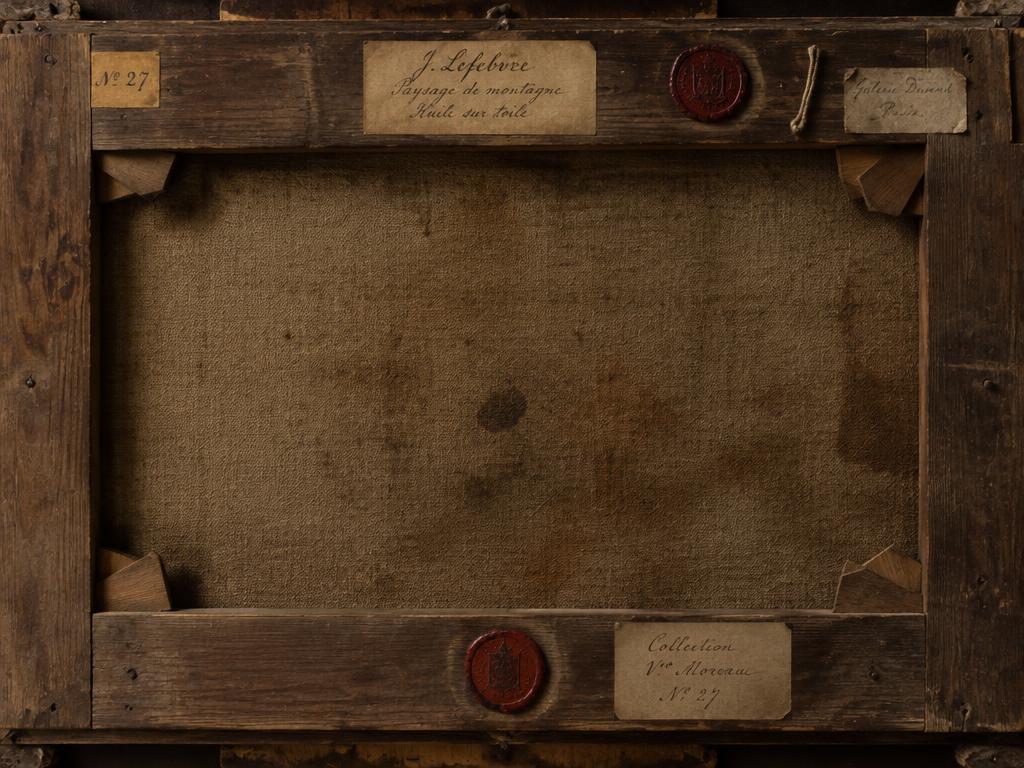
The back often tells more than the front. Old linen canvas is usually coarsely woven, darkened and sometimes relined. The stretcher is often softwood with wedges in the corners. Machine-stapled, bright white canvases usually point to the twentieth century.
Labels, stamps and seals
Stamps of a colourman or canvas supplier, old exhibition labels, wax seals and handwritten numbers give clues about age and provenance. They may have been added later, so always judge them together.
Craquelure and paint layer
Genuine craquelure develops slowly and follows the structure of the paint. An even, identical pattern everywhere may be artificial. Look at the paint in raking light: real brushstrokes have relief, while a print is flat or shows a regular dot pattern under a loupe.
The signature
A signature that sits on top of the craquelure rather than within it was added later. Compare the signature with known examples by the painter. A missing signature is not unusual in the nineteenth century.
Frame and hanging
An original frame, old nails and discolouration where the frame touched the canvas support the age. A new frame says nothing about the painting itself.
Have it assessed
No single feature is decisive on its own. If in doubt, have the work examined by a specialist. Art-Leap is happy to assess your painting, without obligation.